Fewer production surprises
See risky model, DAX, Power Query, refresh and access changes before they become incidents.
From metadata to accountable action
Scan metadata, understand the affected models and reports, assign an owner and preserve the evidence without reading business-data rows or changing anything in Microsoft.
What the BI team gains
See risky model, DAX, Power Query, refresh and access changes before they become incidents.
Find unused measures, models and reports so the team can simplify the estate with evidence.
Give every issue an accountable owner, priority, due date and recorded decision.
Trace important KPIs to their measures, semantic models, reports and responsible people.
How it works
These are not separate tools. Each step keeps the same objects, owners, rule versions and evidence attached as the team moves from discovery to action.
Inventory workspaces, semantic models, reports and Fabric items, then record business and technical ownership.
Run one deterministic C# rule engine across files and tenant metadata, with exact evidence and public rule versions.
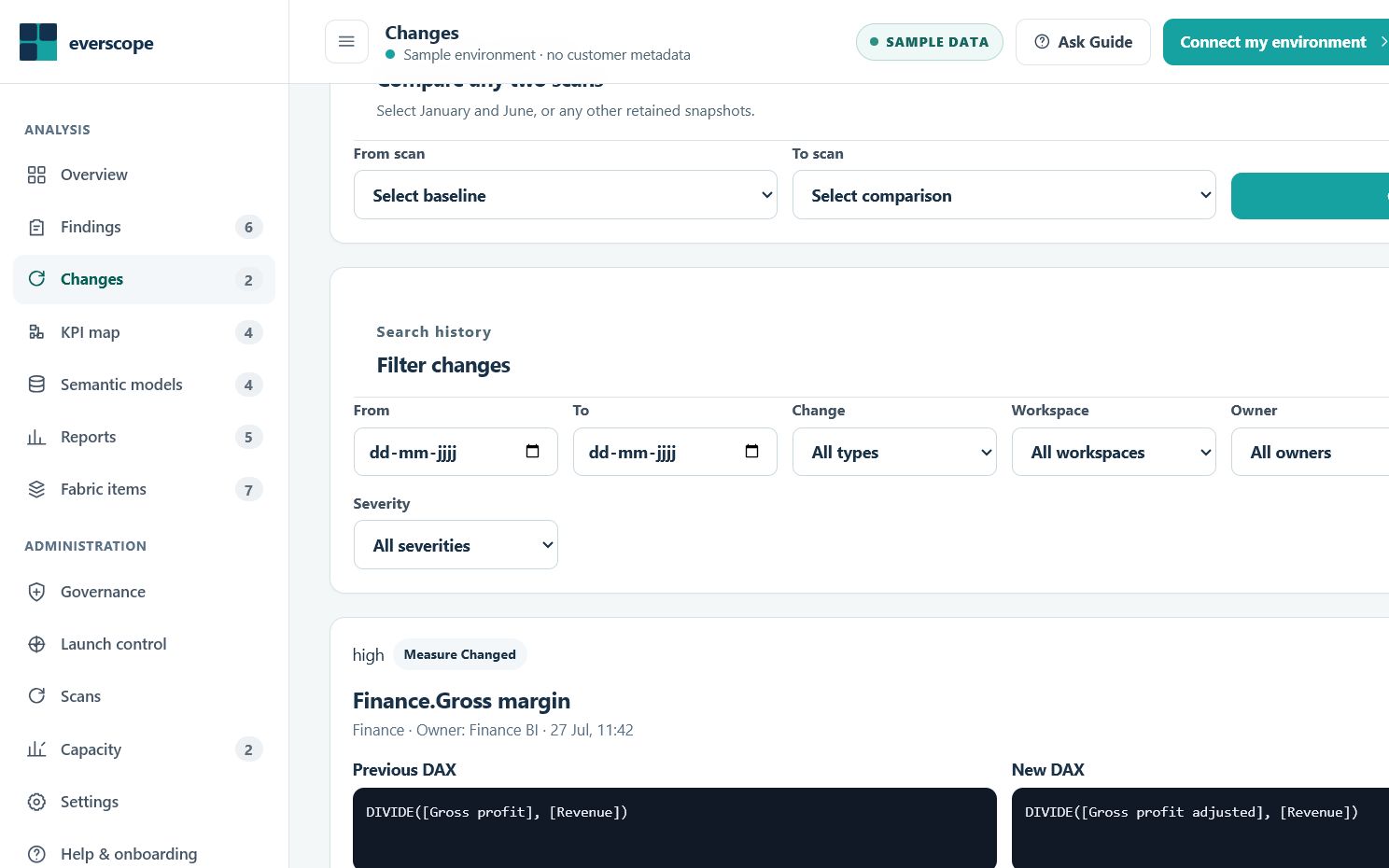
Compare scans, inspect before-and-after definitions and follow the impact chain to reports and business KPIs.
Assign work, document validation and keep approved exceptions and attestations time-bound and visible.
Export the same inventory, issues, ownership, approvals and rule versions when management or an auditor asks.
A concrete example
See the previous and new DAX, the affected model, reports and KPI, and whether a matching approval, exception or attestation exists.
The audit result is a consequence
Because ownership, changes, issues and decisions are already recorded during normal BI work, an audit dossier no longer has to be rebuilt from tickets and inboxes.